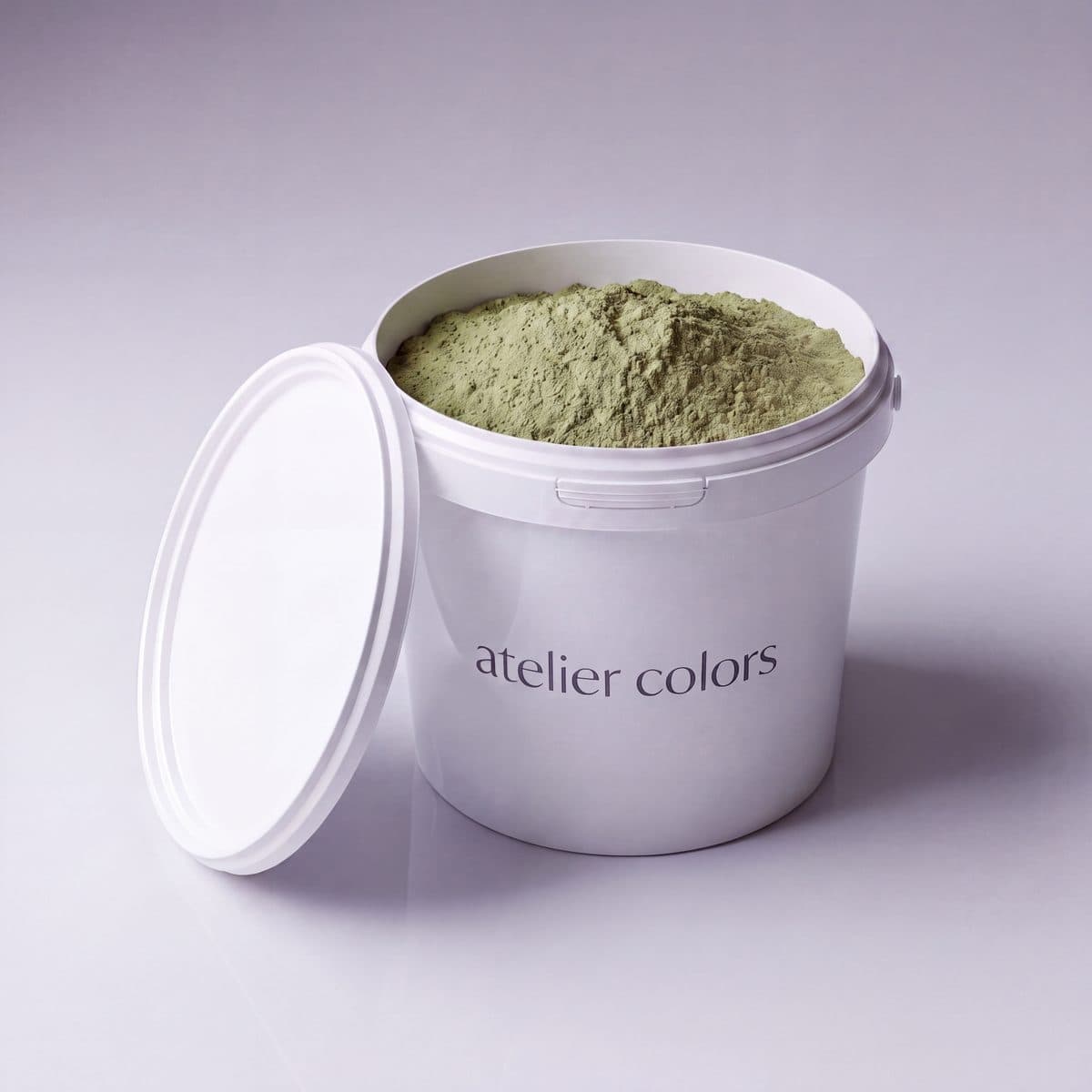
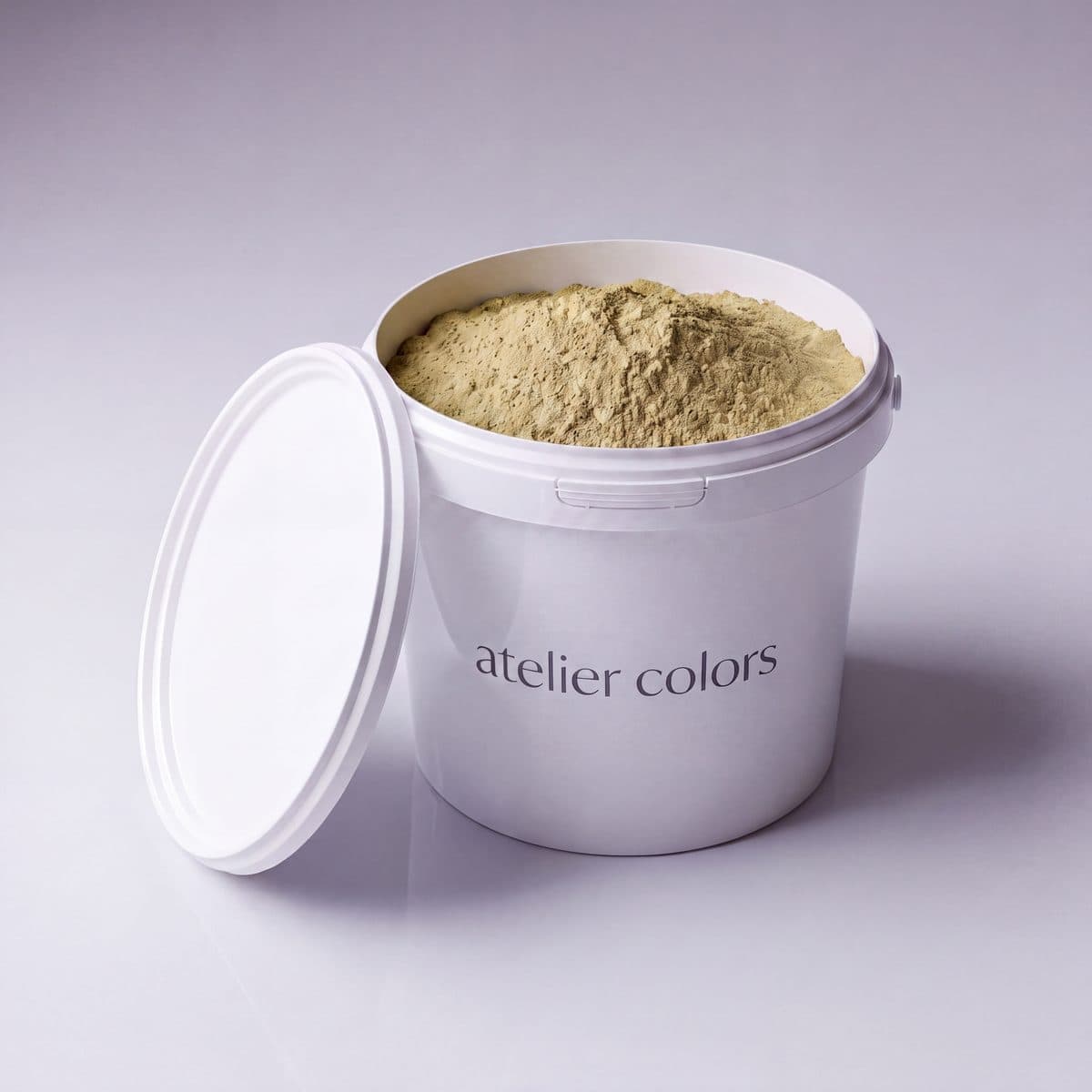
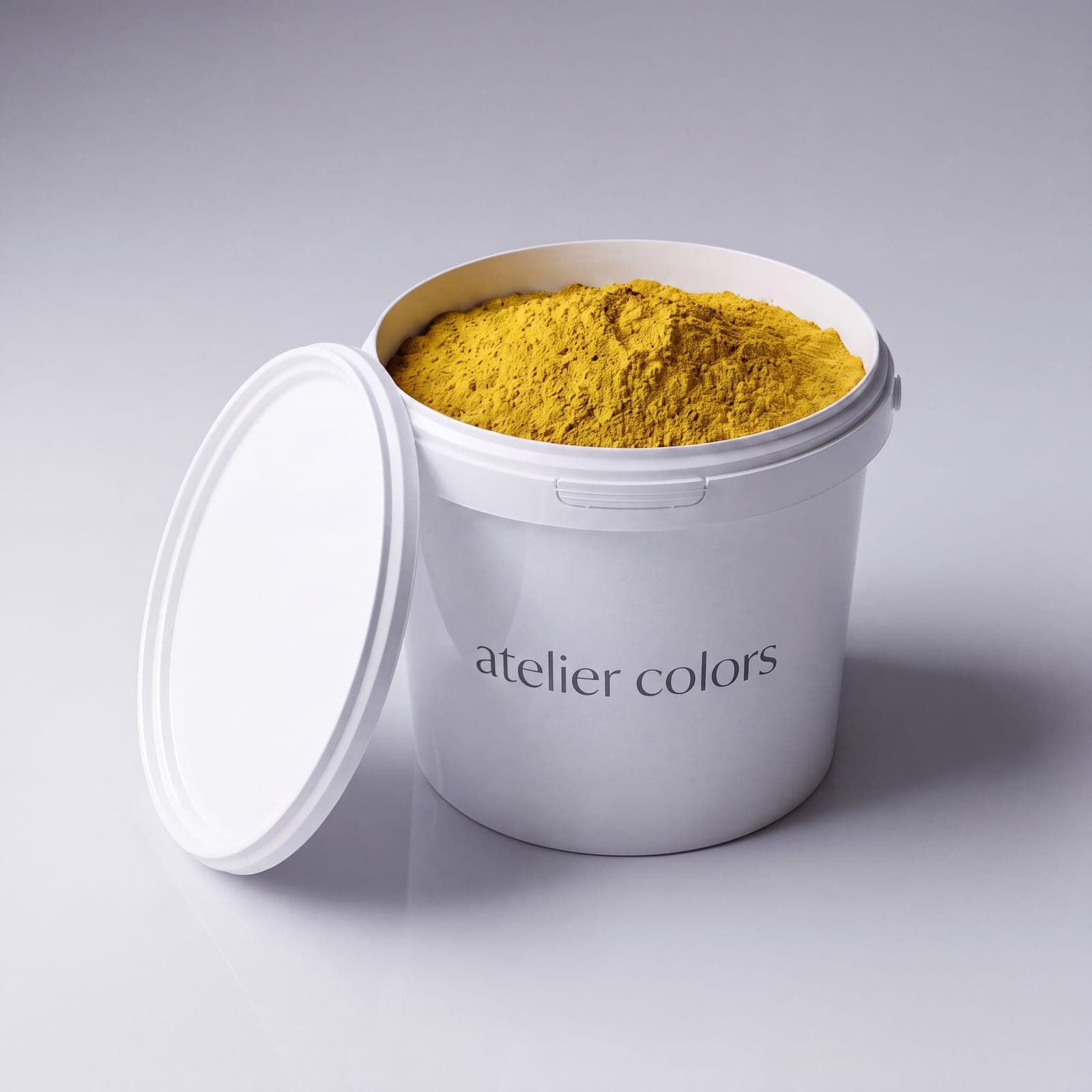
Natural
Earth pigments
Ochres, umbers, siennas. Slightly variable tone batch to batch, a softer note and excellent permanence. For a quiet effect.
Pigments and mixed shades for painting. Small batches, measured lightfastness, honest pigment load.
2026 batch · mixed in Austria · colour card on request
Four steps decide whether the paint holds its tone. None of them can be rushed.
Every pigment has its own lightfastness and covering power. We only take those that do not fade in testing — with cheap substitutes the difference shows months later on the wall.
The pigment is ground and dispersed in the binder. The finer and more even the dispersion, the richer the tone and the less the colour shifts as it dries.
The pigment-to-binder ratio decides coverage. Budget ranges pad it with fillers — it looks the same in the tube and covers half as well on canvas.
From each batch we draw a sample, draw it down on a card and compare it against the reference. The tone must not drift between batches.
We test every batch for lightfastness and coverage before we offer it. What fails, we do not sell.
Higher pigment load, no fillers, measured lightfastness. For work meant to last.
Lower pigment concentration at a lower price. For sketches, practice and large areas.
Same paint, different thinning. Depending on whether the ground should show through or disappear.
A translucent layer the ground shows through. For shading and depth of tone.
Full coverage. Applied thicker and in two coats so brush marks do not read through.
Drying times assume 20 °C and normal humidity. In cold or damp conditions they can double — never lay a second coat over a first that is still wet.
Two pigment sources, two behaviours. Neither is better — they differ.
Earth pigments
Ochres, umbers, siennas. Slightly variable tone batch to batch, a softer note and excellent permanence. For a quiet effect.
Modern pigments
Phthalocyanines, quinacridones. Exactly repeatable tone, higher saturation and tinting strength. For clean, bright colour.
On thinning, mixing shades, and what we learned along the way.
You receive the pigment dry and decide its concentration, use and intensity yourself — that control is the whole point.
Mixing is simple, but the method decides how the colour turns out. Wet the pigment well and work slowly.
The same colour can be a soft translucent layer or a bold opaque surface. Concentration and application decide.